Introduction
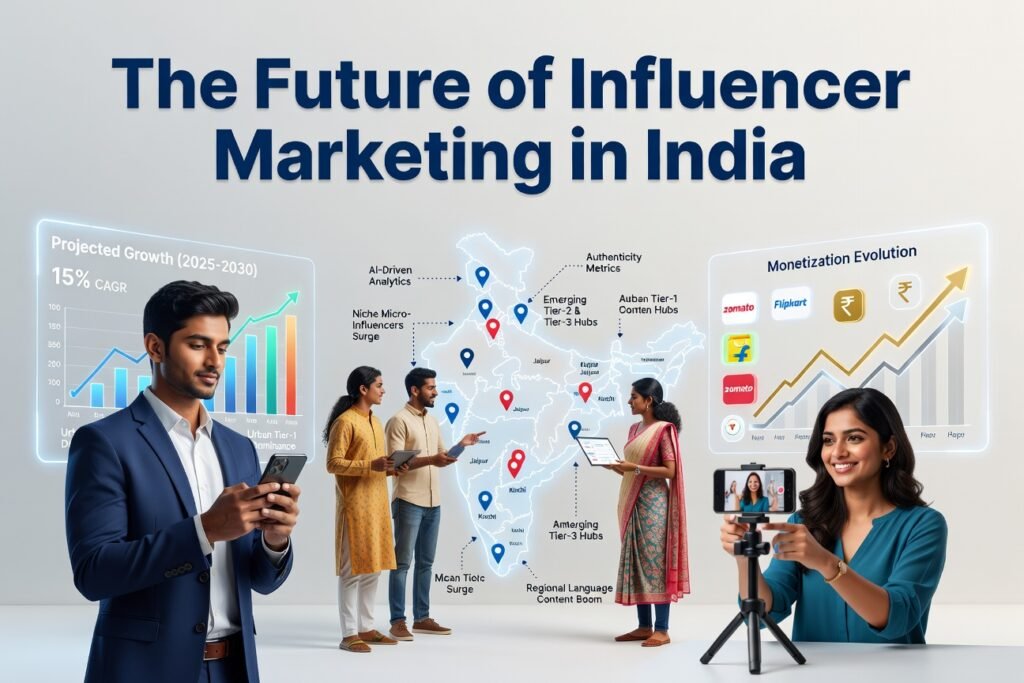
As the digital landscape continues to evolve, influencer marketing has emerged as a powerful tool for brands seeking to connect with their audiences. In India, the growth of social media platforms has led to an explosion of influencers, creating new opportunities and challenges for brands. This blog post will explore the future of influencer marketing in India, highlighting trends, predictions, and strategies for brands to thrive in this dynamic environment.
The Current State of Influencer Marketing in India
Influencer marketing in India has seen remarkable growth over the past few years. With millions of active users on platforms like Instagram, YouTube, and TikTok, the country has become a hotspot for influencers across diverse niches. Here are some key statistics that illustrate the current landscape:
- India has over 1.3 billion internet users, with a significant portion engaging with social media.
- Approximately 67% of marketers in India plan to increase their influencer marketing budgets in the coming year.
- Micro and nano influencers are gaining prominence, as brands seek authentic connections with niche audiences.
Trends Shaping the Future of Influencer Marketing
As we look ahead, several trends are poised to shape the future of influencer marketing in India:
1. Rise of Micro and Nano Influencers
Brands are increasingly recognizing the value of micro and nano influencers, who often have smaller but more engaged followings. These influencers tend to foster trust and authenticity, making them appealing partners for brands looking to reach specific demographics.
2. Video Content Dominance
With the popularity of platforms like Instagram Reels and YouTube Shorts, video content is becoming essential in influencer marketing strategies. Brands are expected to leverage engaging video formats to capture audience attention effectively.
3. Increased Focus on Authenticity
Consumers are becoming more discerning, often favoring influencers who demonstrate genuine passion and expertise in their fields. Brands must prioritize authenticity in their collaborations to build trust and loyalty among their audiences.
4. AI and Data-Driven Insights
Advanced analytics and AI tools are transforming the way brands identify and engage with influencers. Data-driven insights will enable brands to make informed decisions about influencer partnerships, ensuring better alignment with their target audience.
5. Legal Regulations and Compliance
As influencer marketing matures, regulatory scrutiny is increasing. Brands must stay abreast of legal guidelines to ensure transparency in their partnerships, including proper disclosure of sponsored content.
How Brands Can Prepare for the Future
To stay ahead in this evolving landscape, brands should consider the following strategies:
1. Diversify Influencer Partnerships
Brands should work with a mix of influencers across different tiers to maximize reach and engagement. This includes collaborating with both macro and micro influencers to tap into various audience segments.
2. Invest in Quality Content
Quality content will always resonate more with audiences. Brands should focus on creating visually appealing and engaging content that aligns with their brand values and messaging.
3. Leverage New Technologies
Utilizing AI and data analytics can provide valuable insights into audience behavior and preferences. Brands can use these insights to tailor their influencer marketing strategies effectively.
4. Build Long-Term Relationships
Rather than engaging in one-off campaigns, brands should aim to build long-term relationships with influencers. This approach fosters deeper connections and results in more authentic content creation.
5. Monitor Performance Metrics
Tracking the performance of influencer campaigns is crucial. Brands should establish clear KPIs and use analytics tools to measure engagement, reach, and conversion rates, making necessary adjustments for future campaigns.
The Role of Regional Influencers
India’s diverse culture and languages present a unique opportunity for brands to engage with regional influencers. Collaborating with influencers from different states can help brands tap into local markets effectively. For example:
These influencers have a deep understanding of their local audience, making them invaluable assets for brands looking to expand their reach.
Challenges Ahead
While the future of influencer marketing in India looks promising, several challenges must be addressed:
1. Saturation of the Market
As more brands turn to influencer marketing, the market may become saturated, making it harder for new influencers to gain traction.
2. Maintaining Authenticity
With the rise of paid partnerships, maintaining authenticity can become challenging. Influencers must strike a balance between monetization and genuine engagement with their audiences.
3. Evolving Algorithms
Social media platforms constantly update their algorithms, which can impact the visibility of influencer content. Brands and influencers need to stay agile and adapt their strategies accordingly.
Conclusion
The future of influencer marketing in India is bright, characterized by innovation, authenticity, and collaboration. As brands prepare for this evolving landscape, leveraging the right strategies and understanding consumer behavior will be key to success. By embracing emerging trends and addressing potential challenges, brands can create impactful influencer marketing campaigns that resonate with their target audiences.
Are you ready to take your influencer marketing strategy to the next level? Start by identifying the right influencers for your brand and crafting compelling campaigns that engage and inspire your audience.
FAQ
1. What are micro and nano influencers?
Micro influencers typically have between 1,000 to 100,000 followers, while nano influencers have fewer than 1,000. They often have higher engagement rates and more authentic connections with their audience.
2. How can brands measure the success of influencer marketing campaigns?
Brands can measure success through various KPIs such as engagement rates, reach, traffic to websites, and conversion rates. Utilizing analytics tools can provide valuable insights.
3. What role does authenticity play in influencer marketing?
Authenticity is crucial as consumers tend to trust influencers who demonstrate genuine passion and expertise. Brands should prioritize working with influencers who align with their values.
4. Are there any legal regulations for influencer marketing in India?
Yes, brands and influencers must comply with legal guidelines, including disclosing sponsored content to maintain transparency with their audience.
5. How can brands find the right influencers?
Brands can use influencer marketing platforms, social media analytics tools, and consult industry experts to identify influencers who align with their brand values and target audience.