
In the rapidly evolving landscape of marketing in India, businesses are increasingly weighing the effectiveness of influencer marketing against traditional advertising methods. With the rise of social media and digital content, it’s essential to understand how these strategies differ, their benefits, and their potential drawbacks. This comparison will help brands make informed decisions on where to allocate their marketing budgets.
| Attribute | Influencer Marketing | Traditional Advertising |
|---|---|---|
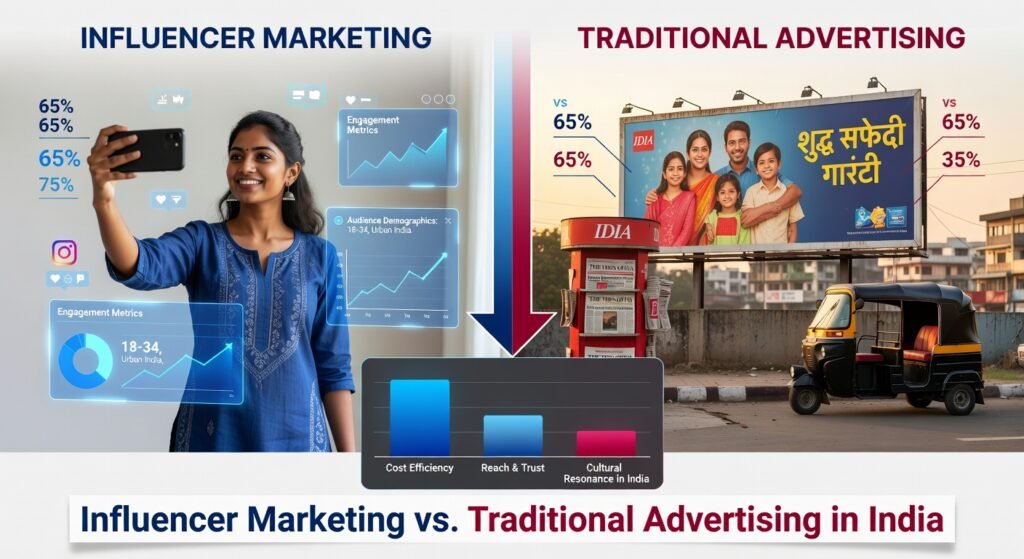
| Audience Engagement | High interaction and engagement rates | Lower engagement; often one-way communication |
| Cost | Varies widely; often more cost-effective | Generally higher fixed costs |
| Trust Factor | Leverages influencer credibility | Often perceived as less trustworthy |
| Targeting | Highly targeted niche audiences | Broad audience reach |
| Flexibility | High adaptability based on real-time feedback | Less flexible; fixed campaigns |
Influencer Marketing
Pros
- High engagement with audiences through relatable content.
- Cost-effective compared to traditional media.
- Ability to reach specific target demographics effectively.
- Flexibility in campaign adjustments based on audience feedback.
Cons
- Dependence on influencer authenticity and audience perception.
- Potential for negative publicity if an influencer’s reputation falters.
- Measurement of ROI can be complex.
Influencer marketing is recommended for brands targeting younger, tech-savvy audiences who value authenticity and peer recommendations. It is particularly effective in sectors like fashion, beauty, and lifestyle.
Traditional Advertising
Pros
- Established methods with predictable results.
- Ability to reach a wide audience quickly.
- Brand control over the message and presentation.
Cons
- Higher costs with fixed media buys.
- Less engagement and interaction with consumers.
- Difficulty in measuring effectiveness and ROI.
Traditional advertising methods are suitable for brands looking to establish themselves in the market and require a broad reach, such as FMCG, automotive, and telecommunications sectors.
Which One Should You Choose?
If your brand is targeting younger consumers and values engagement, influencer marketing may be the best route, especially in sectors like fashion and beauty. However, if your goal is to establish a wide-reaching campaign with a strong brand message, traditional advertising could be more effective. Ultimately, a blended strategy that incorporates both methods may yield the best results.
FAQ
What is the primary difference between influencer marketing and traditional advertising?
Influencer marketing focuses on leveraging the credibility and audience of social media influencers, while traditional advertising typically relies on broader media channels like TV, print, and billboards.
How can I measure the success of influencer marketing?
Success can be measured through engagement metrics such as likes, shares, comments, and conversions, along with tracking brand mentions and sentiment analysis.
Are there specific industries where influencer marketing is more effective?
Yes, influencer marketing is particularly effective in industries such as fashion, beauty, travel, and technology due to the high engagement and relatability of influencers in these sectors.
In conclusion, both influencer marketing and traditional advertising have unique strengths and weaknesses. Brands should carefully consider their target audience, campaign goals, and budget when deciding which approach to take. For more insights, check out our article on the Top 10 Influencers from Mumbai You Should Follow or learn how to Boost Your Brand with Top Influencers in Delhi. Exploring the benefits of influencer marketing vs advertising can greatly enhance your marketing strategy.